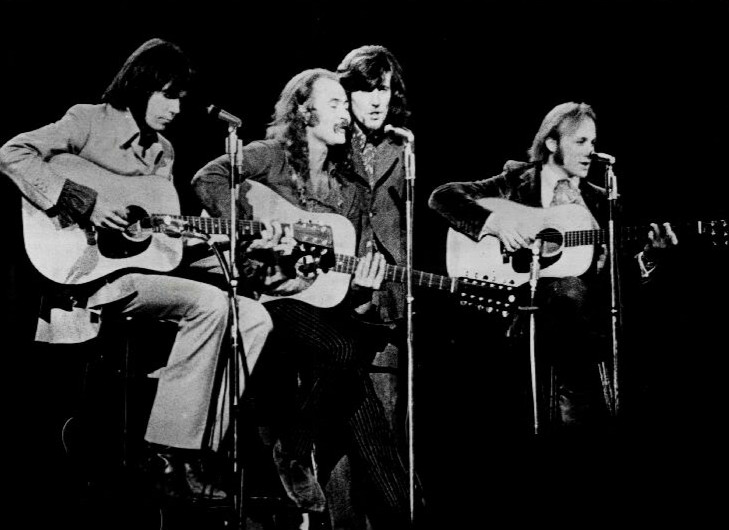
The Year That Defined a Supergroup: Crosby Stills Nash Young 1970
The year Crosby Stills Nash Young 1970 stands as an undisputed landmark in the annals of rock music history. It was a period of intense creative output, soaring commercial success, and profound personal and political engagement for the iconic supergroup. Following their meteoric rise in 1969, including a legendary performance at Woodstock and the release of their self-titled debut (as CSN), the addition of Neil Young had amplified their harmonic blend with a raw, electric edge. 1970 would see this potent combination reach its zenith, producing an album that became a cultural touchstone and solidifying their place as voices of a generation.
This article delves into the specific triumphs, challenges, and lasting impact of Crosby Stills Nash Young 1970, exploring the intricate dynamics that made this year both creatively fertile and personally tumultuous. From the recording studio to the concert stage, the band navigated the complexities of fame, collaboration, and a rapidly changing world, leaving an indelible mark that resonates to this day.
Déjà Vu: Crafting a Masterpiece Amidst Creative Friction
The cornerstone of Crosby Stills Nash Young 1970 was undoubtedly the release of their second album, Déjà Vu. Launched in March 1970, it was an immediate commercial sensation, topping the Billboard 200 chart for four weeks and eventually selling over 8 million copies. However, its creation was far from harmonious. The recording sessions, which reportedly took over 800 hours, were fraught with the clashes of four strong, individualistic personalities, each bringing their distinct songwriting and musical styles to the table.
Déjà Vu perfectly showcased this vibrant, if volatile, synergy:
- David Crosby contributed the ethereal title track, "Déjà Vu," and the poignant "Almost Cut My Hair," reflecting the counterculture's anxieties.
- Stephen Stills brought his virtuosic musicianship and songwriting prowess with "Carry On" and "4 + 20," demonstrating his range from intricate rock to introspective folk.
- Graham Nash provided the album's most accessible, melodic moments with "Teach Your Children" and "Our House," enduring anthems of peace and domestic bliss.
- Neil Young injected his characteristic intensity with "Helpless" and "Country Girl," adding a raw, melancholic beauty that often contrasted with the group's signature harmonies but ultimately enriched their sound.
The album was a testament to the idea that sometimes the greatest art emerges from the greatest friction. Each member fought for their vision, pushing the others to excel, resulting in a cohesive yet diverse collection of songs that captured the mood of the era. The blend of folk, rock, country, and psychedelic influences, underpinned by their signature vocal harmonies, cemented Déjà Vu's status as a classic. For a deeper dive into the origins of this legendary group, you might find our previous discussion, Crosby Stills Nash Young 1970 - Article 1, particularly insightful.
On the Road and In the News: CSNY's Live Impact and Political Voice
Beyond the studio, Crosby Stills Nash Young 1970 was also a year of extensive touring and profound public engagement. Having already made their mark at Woodstock in '69, the band continued to be a major live act, thrilling audiences with their dynamic performances that seamlessly blended acoustic intimacy with electric fervor. Their concerts were more than just musical events; they were communal gatherings, reflecting the hopes and anxieties of their young audience.
Perhaps the most significant moment of their public activism in 1970 came with the release of the protest anthem "Ohio." Penned by Neil Young in response to the Kent State shootings in May 1970, where the Ohio National Guard opened fire on unarmed college students protesting the Vietnam War, the song was recorded and released with unprecedented speed. This immediate, powerful musical response underscored CSNY's role as a potent voice for political dissent and conscience. It was a stark reminder that music could not only entertain but also galvanize and reflect the urgent issues of the day.
Practical Tip: Listeners keen on experiencing the raw power of Crosby Stills Nash Young 1970 live should seek out archival recordings and bootlegs from this period. These often reveal a band pushing the boundaries of their songs, improvising, and connecting directly with their audience in a way that studio albums, however brilliant, cannot fully capture.
The Delicate Balance: Creative Peaks and Personal Valleys for Crosby Stills Nash Young 1970
While Crosby Stills Nash Young 1970 represented a creative peak, it was also a year where the internal tensions that would eventually lead to their various hiatuses became increasingly apparent. The band was a collection of fiercely independent artists, each a successful songwriter and performer in their own right. This collective strength was also their Achilles' heel.
The recording of Déjà Vu highlighted these struggles. Stephen Stills, a perfectionist and multi-instrumentalist, often clashed with Neil Young, who preferred a rawer, more spontaneous approach. David Crosby's personal struggles began to mount, while Graham Nash often found himself in the unenviable position of mediator. The escalating drug use among some members further complicated group dynamics, leading to missed sessions and frayed nerves.
Fact: Neil Young would often leave CSNY sessions to record with his band Crazy Horse, a dynamic that underscored his need for creative autonomy and hinted at the future solo paths each member would increasingly pursue.
This paradoxical dynamic—where the individual members' genius combined for magic, but their egos and personal issues created discord—is a fascinating aspect of the Crosby Stills Nash Young 1970 story. It's a classic tale of a supergroup where the sum was greater than its parts, but the parts themselves were constantly threatening to fly apart.
The Enduring Resonance: Why Crosby Stills Nash Young 1970 Still Captivates
The impact of Crosby Stills Nash Young 1970 extends far beyond its commercial success. The music created during this pivotal year captured the zeitgeist of a generation grappling with war, social change, and personal liberation. Their harmonies became synonymous with hope, even as their lyrics often expressed disillusionment and longing. Their willingness to address political issues through their art set a precedent for many artists to follow.
The influence of Déjà Vu and the sound of CSNY from this period can be heard in countless folk-rock bands and singer-songwriters for decades afterward. Their intricate vocal arrangements, layered acoustic and electric guitars, and profound lyrical depth established a benchmark for the genre. They proved that popular music could be both commercially successful and deeply artistic, challenging and comforting simultaneously.
Actionable Advice: To fully appreciate the intricate layers of harmony and instrumental prowess that defined Crosby Stills Nash Young 1970, dedicated listening with high-quality audio equipment is highly recommended. Pay attention to the subtle vocal interplay, the unique guitar tones, and how each instrument serves the song's emotional core. Many fans discover new nuances with every listen.
Conclusion
In retrospect, Crosby Stills Nash Young 1970 was a year of extraordinary highs and simmering tensions that forged a musical legacy unlike any other. It saw the release of a masterpiece album, demonstrated their immense power as a live act, and cemented their status as essential voices of a tumultuous era. While the internal strife hinted at future dissolutions, the creative output from these twelve months remains a vibrant testament to the power of collaboration, even when challenging. The harmonies of CSNY from 1970 continue to resonate, reminding us of a time when music was a powerful catalyst for change and a balm for the soul. The seeds of their future solo and collaborative efforts, which we'll explore further in Crosby Stills Nash Young 1970 - Article 3, were undoubtedly sown during these intense and unforgettable months.